













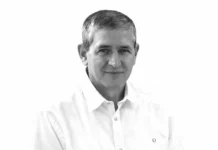
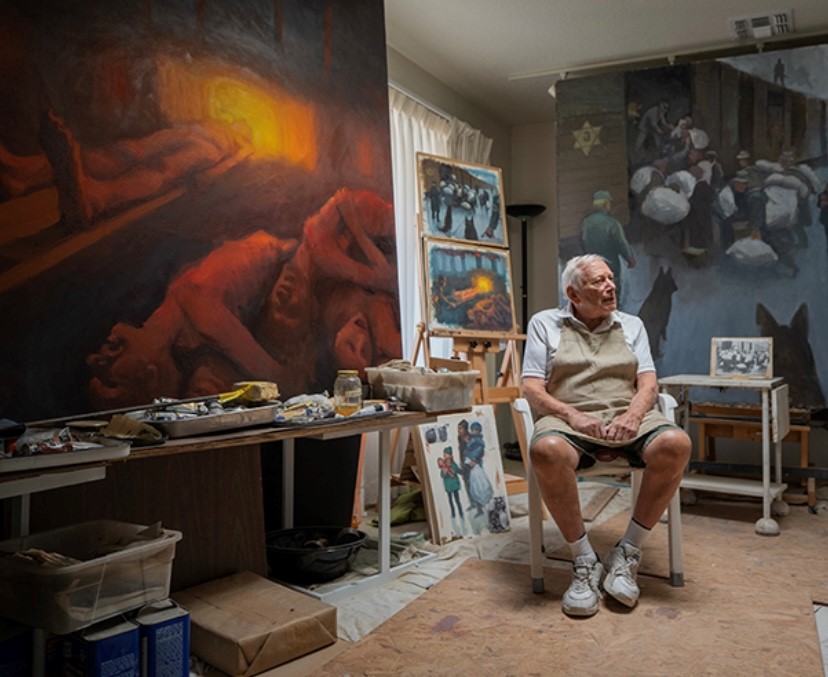
Entering the large art studio of the unique artist, Robert Sutz, gives you a feeling like you have never experienced before. As soon as you enter his studio, you breathe differently, feel differently, react differently, and completely immerse yourself in a dark and cruel period that should never return. In the rooms of that studio, in every corner of it, you feel a strong combination of art and suffering, creation and destruction, humanity and inhumanity, annihilation and survival. On the shelves and around the studio, you see sculptures of survivors’ faces and torsos, without the rest of their bodies. You see Anne Frank pondering her severed future, you see hundreds of thousands of people on the brink of death, you see fear and horror. You see bodies tied up. Bodies being thrown into the crematorium to be burned alive. Your tears flow unimpeded and they glisten in the oil. Then you turn and see the author, not the author of these crimes, but the author of these artistic and heart wrenching bodies of art. It is as though he is passionately and firmly calling out to the world, we must never allow this horror to happen again! You look again at the author of these artistic creations and marvel at how this man, now at the age of 94, has dedicated decades of his life to transforming horror into “art in protest”. The question arises, what has kept him going?
Yetta Kodra: Interview with the great American artist, Robert Sutz

Robert Sutz is an American Jewish painter and artist. He comes from a Hebrew family originating from Poland. He was born in Chicago in 1929, and he lived and worked there until 1996. He completed his studies at the Academy of Arts and went on to build a successful career as the director of the successful global advertising agency, “Leo Burnett Advertising”, for 22 consecutive years. During his career, he practiced various forms of art, including painting with oils, ink, and pastels. He created many paintings of urban scenes in Chicago, but above all, he is now known for creating life masks. For his excellent works of art, he has received top awards from various American locations. In 1994, Sutz interviewed many Holocaust survivors for a major project by the renowned American director, Steven Spielberg. In 1997, he left Chicago and settled in the city of Scottsdale, AZ, where he created a private studio for himself. Since then and until now at the age of 94, he has tirelessly worked in his studio without taking a break.
Holocaust Art Project
In 2000, Sutz dedicated his time to creating life masks of Holocaust survivors. This work is in honor of his father and family who lived in Poland and perished in the infamous Auschwitz camp. His entire family, with the exception of his father and a cousin, perished in the camp. Since 2000, Robert Sutz has created nearly 200 life masks of Holocaust survivors and survivors of various wars or genocides. His life masks have been exhibited in galleries across the U.S. He has decided to donate all of his artistic works to a museum in Phoenixt, which is planned to open in 2025. It should be emphasized that his art not only has artistic value but also significant educational value.
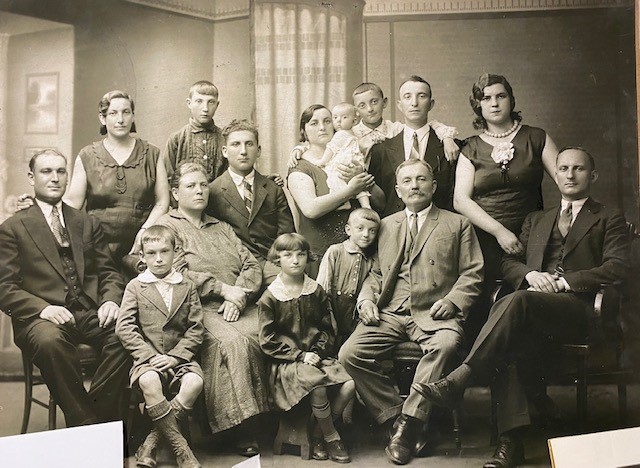
We look again at the author of these artistic creations and marvel at how this man, now aged 94, has dedicated decades of his life to transforming this horror into “art in protest”. The question arises, what has kept him going?
Mr Sutz, can you tell your inspiration behind creating Life Masks? How old were you when you began and when did you start creating them?
I was very impressed to see a life mask of Abraham Lincoln when I was 14 years old, the year after my bar mitzvah. I knew it was not a sculpted portrait, but one taken from life, an irrefutable likeness. I was determined to learn how to make one myself. Thus began an 80-year journey of drawing, painting and mask making.
You have worked on your craft for nearly 30 years. You do this work all day, every day. Do you have moments of boredom while working on your art?
I never get bored; I look forward every day to go to my studio and work on paintings and life masks that are in the works. I started the Holocaust art project approximately 30 years ago, after I began conducting interviews for the Spielberg’s “Survivors of the Shoah” project. However, I pledged to become an artist when I was 16 and I’ve been making art since then.

What message do you wish to portray through your life masks?
I want everyone that sees them to realize that each mask is taken from life and is an irrefutable likeness. Each mask is one of a kind, just as the survivors themselves, like all living beings, are incredibly unique and precious. Sadly, there are still people that believe the Holocaust never happened. This number is probably much larger who have not learned about the Holocaust. For them, it’s as if the killing of millions of people either did not happen or has no historical significance. My Holocaust art project is an attempt to preserve the memory of the Holocaust for generations to come. In my small way, I hope to help generations to come remember those who were casualties of these unspeakable crimes, those who survived and those who helped them survive.
You once told me that you look forward to going to your art studio every day and working. Do you ever lack the will to go to the studio?
No, I look forward to going to the studio every day. I am anxious to get there! It is my favorite place in the world, and it continues to keep me challenged, inspired, and energized.

As a child, how did you feel when you learned about the terrible stories of the Holocaust?
I found it hard to believe that such a well cultured country could commit such unbelievable horrendous crimes. My own father’s family died at Auschwitz, but he did not speak of them. There would be many aunts, uncles, cousins, and grandparents who would be completely absent from my life.
Who will you accomplish???? This is wrong your work to? Have you trained someone to make life masks?
I have found a few college graduates in fine art that wanted to work with me, but after learning how detailed and messy the work was, they only wanted to learn a certain part of the process, so they only stayed with me for a short time. My caregiver Lori Moric has shown interest in casting the masks and she has been very helpful in both assisting me in making masks and casting my very large backlog of negative molds — many of which were made of family members.
You have needed many supplies to create the 200 living masks that you have made so far. How much does it cost to make a living mask and who pays for these expenses?
Before starting my Holocaust project, all my commissioned life masks were $35000.each. No charge for all the Holocaust survivors, liberators, and righteous gentiles’ life masks. They have been kind enough to share their stories with me and I find it a privilege to capture them in plaster and to record their stories on video.

As a dedicated artist, you spent a great deal of your time on your art. Did you have the support of your family? Have you had criticism and dissatisfaction from your wife or children?
Yes, I have always had support from my family. They are proud of what I am doing. And yet I recognize that my laser focus on my work put a greater burden on my wife. She was an incredibly devoted mother to our six children. For 2-3 years when the children were very young, we also cared for my brother’s two children. So with 8 children in the house, my wife had her work cut out for her. I could never have created the extensive body of Holocaust and non-Holocaust art without the support and sacrifice of my wife Leah. She passed away 5 years ago now, but I feel her presence and immense kindness each day.
How do your children evaluate your work now that they are adults?
They realize how important my work is.and they are trying to help. Their interest in my art seems to have grown as they’ve gotten older. For many years, they were the subject of paintings, pastels, photographs, and life masks. I think they appreciate that this created a vivid record of their childhood. I think they are also impressed by the passion and energy I pour into my work even into my 90s. My son Michael is a filmmaker and has documented my work on the Holocaust art project from very near the beginning.

You have dedicated your life to this rich work of art which will be your legacy long after you are gone. Does this bring you peace when you think about being gone one day? you content or fulfilled with your work as an artist?
Looking back, I am very glad I have this Holocaust art collection, as a reminder for future generations to know this unbelievable horrendous period happened and must never be forgotten! While, eventually, it will be out of my control, I hope my art will be preserved and will play a small part in “Tikkun Olam,” repairing the world.
Do you think that your work as an artist has been sufficiently supported by the Jewish community and the American government?
Yes, I have received many awards for my Holocaust art. I am donating the entire collection to the Arizona Jewish Historical Society to be stored and displayed in their Hilton Family Holocaust Education center. This center will be built within the next 2-3 years and will provide visitors with valuable lessons they can take from the Holocaust. It’s my hope that the center will inspire them to root out even the smallest sprout of hatred and intolerance.
When will the museum housing your artwork open? Was this your initiative, or the initiative of the Jewish community?
This was the initiative of many dedicated and passionate community members who were inspired by my art. They worked tirelessly for many years to create a museum that would house my Holocaust art. Those efforts eventually evolved into building a Holocaust Education center that would include my work but would have a broader mission of bringing to life the many lessons the Holocaust can teach us and connecting those lessons to contemporary challenges. Steve Hilton, Dr. Lawrence Bell, Rabbie Jeffrey Schesnel, Tony Fusco, Oskar Knoblauch and his daughter and son-in-law Linda and Gary Thomas are just a few of the remarkable individuals who have worked tirelessly to make this dream a reality. I am grateful for the many years and critical resources they have poured into this center.